
Ever wondered what is the fastest stroke in swimming and why some strokes feel smoother or quicker than others? Each swimming style has its own speed, rhythm, and technique, but one clearly stands out above the rest.
In this guide, we’ll rank the five main swimming strokes from fastest to slowest, breaking down what makes each one unique.
Whether you’re training for a race, improving your lap times, or simply curious about how swimmers reach top speed, you’ll discover the science and skill behind the fastest swimming stroke, and how mastering it can take your performance to the next level.

Which Swimming Stroke Is The Fastest? Ranking 5 Swimming Strokes
Here’s where we reveal the ultimate ranking, from the fastest, most powerful stroke to the slowest, most graceful.
Each stroke has its own rhythm, energy demand, and technique. By understanding their unique strengths, you can train smarter, improve efficiency, and make every swim count, whether you’re building fitness or chasing personal bests.
1. Freestyle
The freestyle, also known as the front crawl, proudly holds the title of the fastest swimming stroke. Its speed comes from a combination of continuous propulsion, strong alternating arm strokes, and a steady flutter kick that keeps the body balanced and streamlined.
Swimmers rotate their bodies slightly with each stroke to reduce drag and generate more power, allowing for smoother and faster movement through the water.
Breathing is done to the side in rhythm with the arm movement, helping maintain momentum without interrupting the flow. Elite swimmers perfect this coordination to achieve explosive speed in short sprints and remarkable endurance in long-distance races.
Freestyle is not only the go-to stroke for competitive swimming but also the most practical for beginners to learn because of its natural rhythm and adaptability. With consistent practice and proper coaching, anyone can develop an efficient freestyle that feels effortless and powerful.
2. Butterfly
The butterfly stroke takes second place, a true display of power, timing, and endurance. Known for its demanding technique, the butterfly stroke combines a simultaneous arm pull with a strong dolphin kick, creating huge propulsion with every wave-like motion of the body.
When executed correctly, the stroke propels swimmers forward with a smooth rhythm that almost looks effortless, though it requires tremendous core and upper body strength.
Every pull-and-kick cycle depends on precise timing: both arms sweep out of the water together as the chest and hips rise and fall in harmony. This unique undulating movement helps maintain momentum and prevents excessive drag.
While butterfly is physically taxing, it’s also one of the most rewarding strokes to master, improving muscle tone, stamina, and water confidence. For those looking to challenge themselves, butterfly training can be an exciting way to build strength and power in the pool.

3. Backstroke
Swimming on your back may appear relaxing, but backstroke can be surprisingly swift and technically refined.
It uses alternating arm movements and a consistent flutter kick to generate propulsion while keeping the body streamlined on the surface. Because the face stays above water, breathing is easier to manage, allowing swimmers to maintain a steady rhythm and pace without losing momentum.
Body alignment is crucial, the hips should stay close to the surface to reduce drag, and the head should remain still, with eyes gazing upwards. Proper rotation of the shoulders with each stroke allows for a longer reach and stronger pull, creating smooth, efficient movement through the water.
Backstroke is ideal for improving posture, flexibility, and balance, making it an excellent addition to any swimmer’s training routine. For beginners and adults alike, mastering backstroke builds confidence and comfort in the pool, particularly when practising floating and coordination.
4. Breaststroke
The breaststroke is the most graceful of the competitive swimming strokes, known for its rhythmic tempo and technical precision.
Each stroke begins with a simultaneous arm pull and a powerful frog-style kick, followed by a glide phase that allows the swimmer to recover energy before the next movement. While it’s the slowest of the four main competitive strokes, its calm, controlled pace makes it perfect for developing endurance and efficiency.
Because both arms and legs move in sync, coordination is key. The head naturally lifts out of the water for breathing, which helps maintain a comfortable rhythm for longer swims.
The breaststroke is especially popular among learners and recreational swimmers because it feels natural and safe, the swimmer’s head can stay above the surface for most of the stroke. It’s an ideal starting point for children and adults who prefer a relaxed yet effective way to build strength and confidence in the water.
5. Sidestroke (Non-Competitive)
The sidestroke might not feature in competitive races, but it’s a classic technique that remains highly valuable for endurance and rescue swimming.
Unlike other strokes, it involves swimming on one side using a scissor kick and alternating arm pulls to glide efficiently through the water. Its gentle rhythm and minimal splash make it one of the most energy-conserving strokes, ideal for covering long distances without tiring quickly.
Because of its efficiency, sidestroke is often taught to lifeguards and rescue swimmers who need to tow others to safety. It also allows swimmers to keep their face above the water, which makes breathing simple and relaxed.
For adults or beginners seeking a low-intensity yet highly functional stroke, sidestroke is a great way to enhance stamina and comfort in the water while focusing on smooth, controlled movements.

Which Swimming Strokes Uses The Most Energy?
Speed comes at a cost, and in swimming, that cost is energy. Among all strokes, the butterfly is the most physically demanding. It requires tremendous upper-body strength, core stability, and precise timing to lift both arms out of the water simultaneously while performing a powerful dolphin kick.
Every movement engages large muscle groups in the shoulders, chest, and abdomen, turning the butterfly into both a strength and cardio workout in one.
The freestyle, while faster overall, uses energy more efficiently thanks to its alternating arm motion and smoother rhythm. It allows for continuous propulsion with less strain, making it suitable for endurance swimming.
The breaststroke and sidestroke, on the other hand, are gentler and more sustainable over long distances, perfect for recovery days or relaxed fitness sessions.
Understanding which strokes consume more energy helps swimmers train smarter, alternating between high-intensity strokes like butterfly and more efficient ones like freestyle or breaststroke can balance endurance and recovery.
It’s not just about swimming fast, but about learning how to use your energy wisely to build strength, stamina, and confidence in the water.
What Is The Fastest Olympic Swimming Stroke?
In the world of competitive swimming, freestyle reigns supreme as the fastest Olympic stroke. Used in both sprint and long-distance events, freestyle allows athletes to achieve incredible speeds due to its continuous propulsion, streamlined body position, and efficient breathing technique.
Elite swimmers such as Caeleb Dressel and Ariarne Titmus demonstrate just how powerful the stroke can be, moving through the water at over 2 metres per second during top-level races.
What makes freestyle unbeatable at the Olympic level isn’t just raw strength, it’s technique. Small adjustments in body rotation, hand entry, and breathing rhythm can shave off precious fractions of a second.
Swimmers focus on minimising drag and maximising propulsion, training relentlessly to perfect each phase of the stroke.
For everyday swimmers, freestyle offers more than speed, it’s a gateway to better fitness, endurance, and body awareness.
Learning proper technique through guided lessons can help adults and children experience the same sense of rhythm and power seen in Olympic athletes, while staying safe and efficient in the water. It’s proof that with the right coaching and mindset, anyone can swim smarter, faster, and stronger.
Conclusion About The Fastest Stroke In Swimming
So, what is the fastest stroke in swimming? Without a doubt, it’s the freestyle, the perfect balance of speed, efficiency, and endurance. Its continuous arm pulls, steady kicks, and streamlined body position make it the stroke of choice for anyone aiming to move swiftly and smoothly through the water.
But here’s the truth: every stroke, from butterfly to breaststroke, teaches something valuable, rhythm, control, and the joy of movement.
Swimming isn’t just about staying afloat; it’s about building a lean, powerful physique through consistent practice and smart technique.
Each session in the pool strengthens your body, clears your mind, and reminds you that progress comes one stroke at a time. Whether you’re perfecting your freestyle or learning to love the water again, the journey is always worth it.
If you’re ready to take your swimming to the next level, consider JustSwim Singapore.
Founded in 2020 by a passionate team of competitive swimmers, triathletes, and lifesavers, JustSwim specialises in private swimming lessons for both adults and children. We believe smaller class sizes help learners stay focused, build confidence, and progress faster.
Our patient and experienced coaches are committed to ensuring every swimmer, regardless of age or skill level, masters each stroke safely and effectively.
We never leave the pool until you get it right! Through our unique teaching approach and customised lesson plans, we make learning enjoyable, structured, and results-driven.
Make the pool your new favourite workout spot, where every lap brings you closer to strength, skill, and confidence. Visit JustSwim Singapore today and experience how expert coaching and personal attention can help you swim smarter, faster, and better.
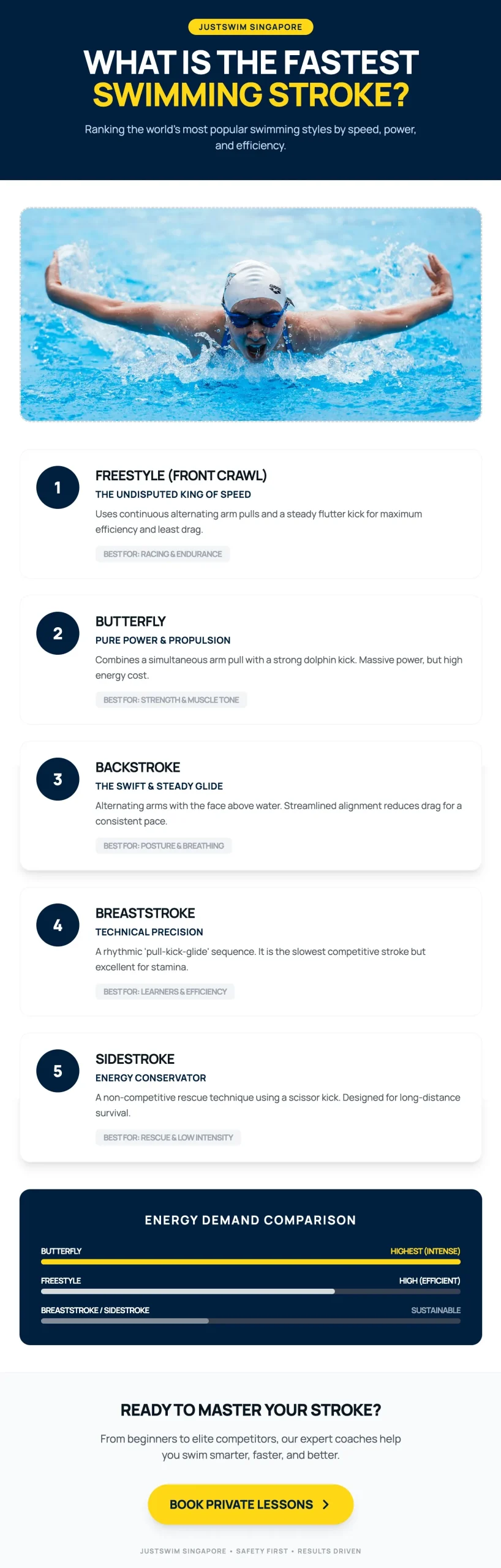
More from the blog
- Swim schools we admire around the world
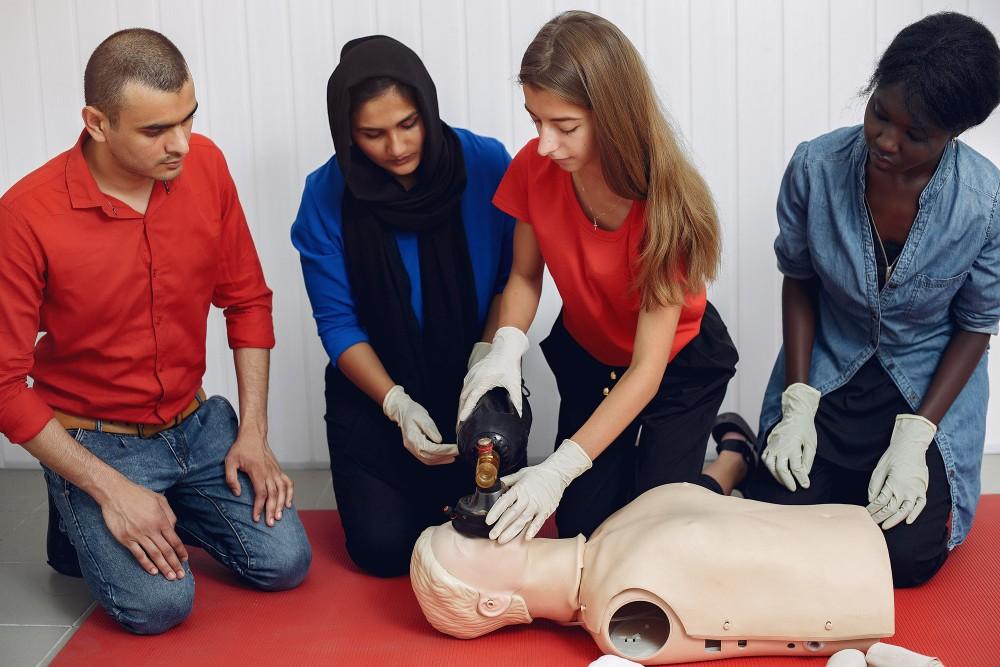 SFA Certification in Singapore: What It Covers, How Long It Lasts, and How to Renew
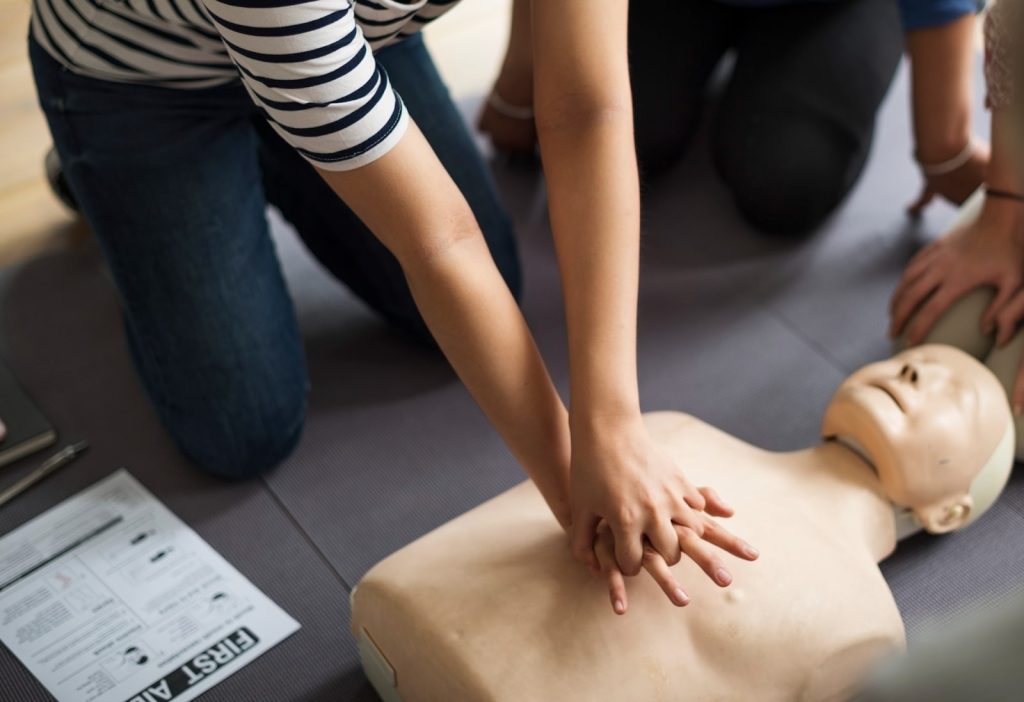 Occupational First Aid Course Singapore: OFAC and Other Types
 Singapore Life Saving Society (SLSS): Every Certification Explained
 SWOLF Swimming: What It Is, Average Scores & 5 Tips To Improve
Frequently asked questions
Does Body Position Affect What Is The Fastest Stroke In Swimming?
Yes, body position has a major impact on what is the fastest stroke in swimming. A streamlined, horizontal position reduces drag and allows water to flow smoothly around the body. Maintaining this alignment helps swimmers move faster and conserve energy across all strokes.
Are Professional Swimmers Faster In Butterfly Or Freestyle?
Professional swimmers are consistently faster in freestyle than in butterfly. While a butterfly generates tremendous power, it’s more demanding and less efficient over long distances. Freestyle’s alternating arm pulls and continuous propulsion make it the top choice for speed.
Is Breathing Technique Important In Achieving The Fastest Stroke In Swimming?
Yes, breathing technique is essential to achieving the fastest stroke in swimming. Poor breathing disrupts body alignment and rhythm, slowing you down. Controlled, well-timed breathing in freestyle helps maintain speed, balance, and endurance.
Can Children Learn The Fastest Stroke In Swimming Easily?
Yes, children can learn freestyle, the fastest stroke, with patience and proper instruction. Its natural arm movement and rhythmic kicking make it easier for young swimmers to grasp. With consistent coaching, they can quickly build confidence and coordination in the water.
Do Swimming Lessons Help You Learn The Fastest Stroke More Effectively?
Absolutely. Professional swimming lessons teach correct technique from the start, preventing bad habits that slow progress. Guided instruction also helps swimmers refine breathing, body position, and stroke rhythm for maximum speed and efficiency.
Should Beginners Start With The Fastest Stroke In Swimming?
Beginners can start with freestyle, but it’s often best to build water confidence through slower strokes first. Once they’re comfortable with floating, breathing, and basic coordination, freestyle becomes easier to master. This gradual approach helps learners swim faster and safer in the long run.