
Freestyle (front crawl) is the stroke most Singapore swimmers want to master first, and for good reason: done well, it is the fastest, most efficient way to move through water and the least tiring over distance. But it is also the stroke where small errors compound fastest, and where sheer effort tends to make things worse, not better. At JustSwim, our certified coaches spend a lot of pool time gently undoing the same handful of habits with new swimmers, because good freestyle is far more about balance and timing than about strength.
This guide walks through freestyle swimming technique the way a coach would build it up in the water: body position first, then the kick, the arm stroke, and finally breathing tied to it all. It is written for adults and children learning from scratch, so if you are looking at freestyle swimming for beginners, start at the top and work down. Learn how to swim freestyle in the right order and the stroke starts to feel effortless surprisingly quickly.
Quick answer:
Good freestyle is built in order: a flat, streamlined body position first, then a relaxed kick from the hip, a high-elbow catch and pull, and breathing timed to your body roll while you exhale underwater. Fix your body position first and the rest follows.
Start with body position and streamline
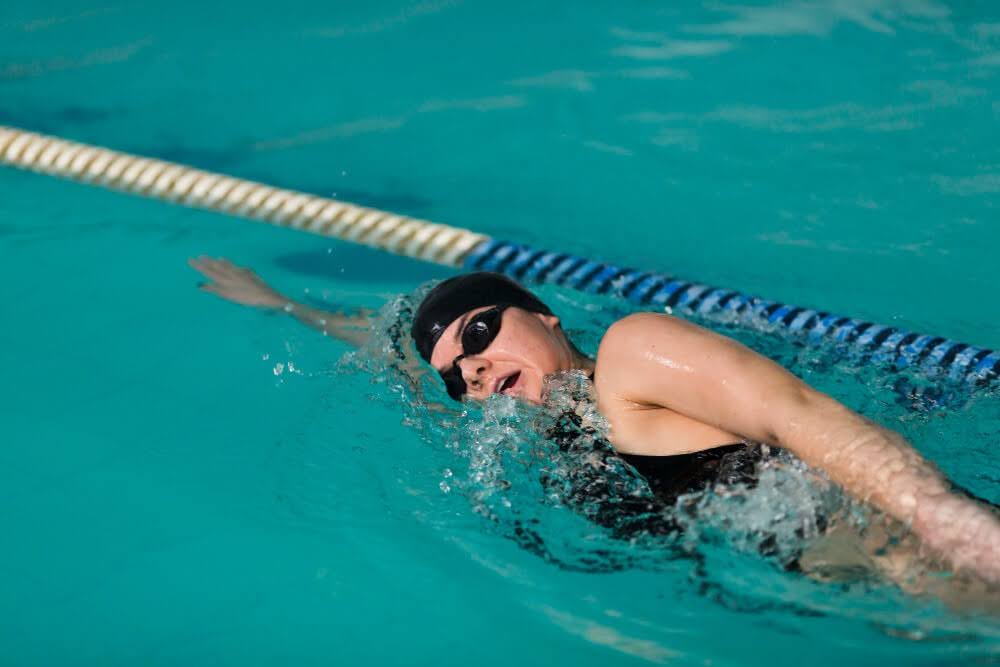
Everything in freestyle sits on top of a good body position. Your goal is to float as flat and long as possible, just below the surface, so the water flows past you rather than piling up in front. Picture a straight line running from the crown of your head through your spine to your heels. If your hips and legs sink, you create drag, and no amount of hard kicking or pulling will overcome it.
The most common cause of sinking legs is lifting the head. In water, the head is heavy and the body pivots around it like a see-saw: look forward or up and your hips drop; keep your face down and lengthen the back of your neck and your legs rise. Press your chest very gently into the water and let your hips float up towards the surface.
A useful cue we give at JustSwim is to swim ‘tall’, reach the leading hand forward as if trying to touch the far wall, which stretches the whole body out and reduces drag. In our warm Singapore pools you can hold a relaxed streamline comfortably, so practise pushing off the wall in a tight arrow shape, arms extended overhead and squeezing the ears, and hold it for a metre or two before you start to stroke.
The flutter kick: from the hip, relaxed ankles
The freestyle kick keeps your legs up and adds a little propulsion, but for most learners its main job is balance, not speed. The movement starts at the hip, not the knee. Think of a long, loose whip: the thigh initiates, the knee bends only slightly and naturally, and the movement travels down to a floppy foot. Kicking from the knee produces the dreaded ‘bicycle’ pedalling motion that creates drag and tires you out fast.
Keep your ankles loose and your feet slightly pointed, so the top of the foot presses back against the water on the down-kick. Stiff, flexed ankles act like brakes. The kick should be fairly compact, imagine your feet just brushing past each other within the width of your body, and steady rather than frantic. A relaxed, rhythmic kick beats a splashy, exhausting one every time.
Beginners often over-kick because it feels like effort equals progress. It rarely does. Aim for small, quick, springy kicks that keep your legs near the surface, and let your arms do most of the moving-forward work.
The arm stroke: catch, pull and recovery
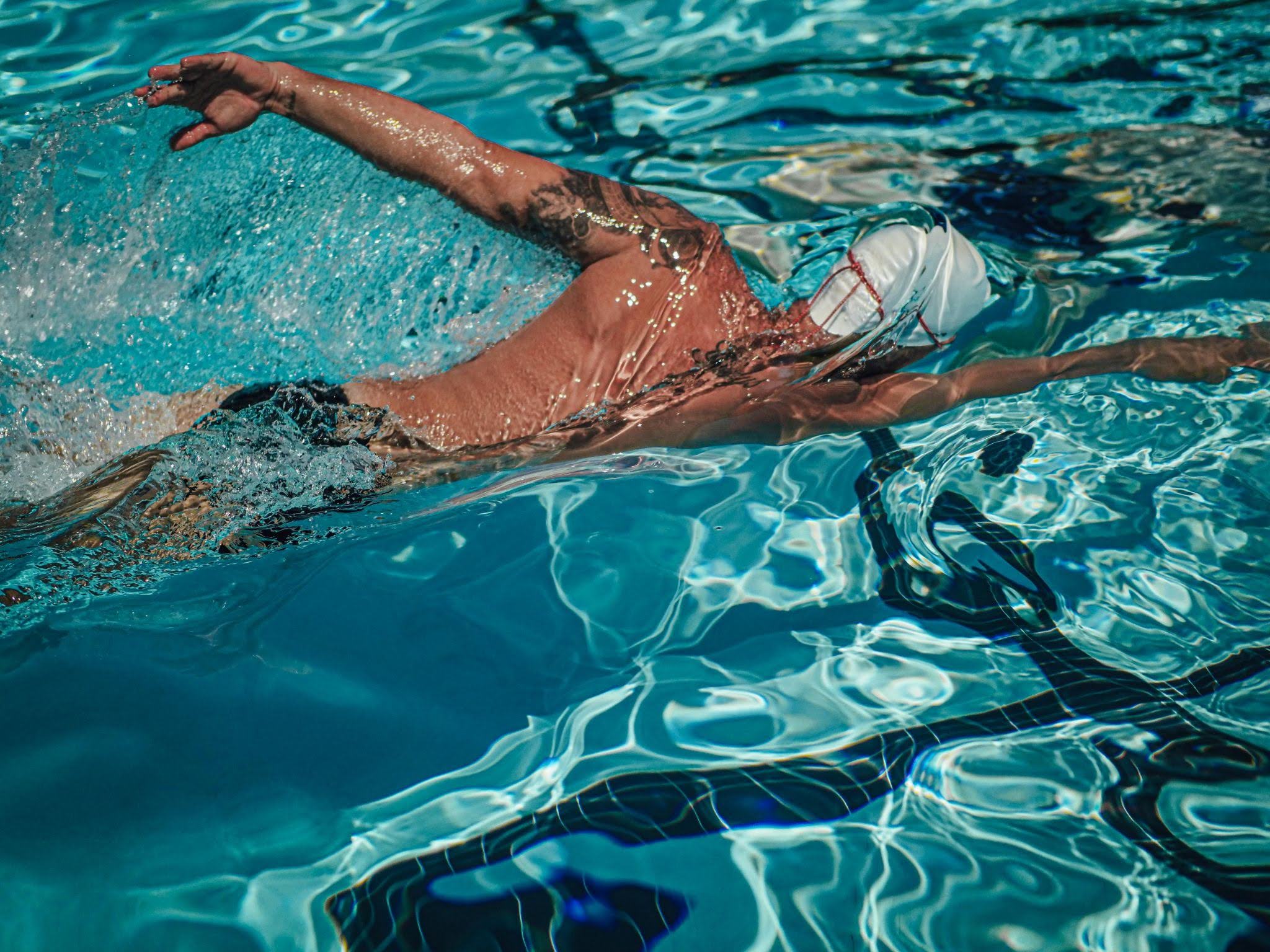
The arm stroke is where freestyle propulsion actually comes from, and it has three phases. The catch is the setup: as your hand enters the water in front of your shoulder (fingertips first, then wrist, then forearm), reach forward and then bend the elbow so your forearm and hand face backwards, like reaching over a barrel. You are trying to get a firm ‘hold’ on the water before you pull.
The pull is the power phase. Keeping that high elbow, press the water straight back towards your hip in a smooth line, think of pulling your body past a fixed hand, rather than pushing water down. The hand exits near the top of the thigh. Rushing the front of the stroke and dropping the elbow is the biggest reason beginners feel like they are working hard but going nowhere.
The recovery is the rest phase, over the water. Lead with a high elbow, let the forearm and hand hang relaxed, and swing forward to enter cleanly in front of the same shoulder. Crucially, freestyle is a rotation stroke: roll your body from the hips and shoulders towards the pulling side. This rotation lengthens each stroke, engages the bigger back muscles instead of just the arms, and makes breathing far easier.
Breathing: timing, side vs bilateral, and exhaling underwater
Breathing is where most freestyle attempts fall apart, and almost always because of one thing: holding the breath. If you hold air in while your face is down and only try to breathe out and in during the tiny window your mouth is clear, you will feel rushed and panicky and run out of air. The fix is to exhale continuously and steadily through your nose and mouth while your face is in the water, so that when you turn to breathe you only need to breathe in.
Time the breath to your body rotation. As one arm pulls and your body rolls to that side, turn your head with the roll, not independently, so your mouth clears the surface just enough to sip air. You do not need to lift the head; keep one goggle in the water and breathe into the small pocket of air your rolling body creates. Turn the face back down and resume exhaling.
Bilateral breathing means breathing every three strokes, alternating sides; side breathing means every two strokes, always to the same side. Bilateral evens out your stroke and keeps you swimming straight, so it is worth learning early. But do not sacrifice calm for it, if breathing every three feels like starvation at first, breathe to your comfortable side more often and build the three-stroke pattern gradually.
Common mistakes coaches see (and how to fix each)
These are the faults our coaches spot most often in new freestyle swimmers. The good news is each has a simple, specific fix, you rarely need to overhaul the whole stroke at once.
- Lifting the head to breathe or sight forward sinks the hips and adds drag. Fix: keep the face down, look at the bottom, and turn (don’t lift) the head to breathe, keeping one goggle in the water.
- Crossing over the centre line, the hand enters past the midline, sending you snaking side to side. Fix: enter each hand in line with its own shoulder, imagining two parallel rails, and reach straight forward.
- Wide, slapping entry, the hand slaps down out to the side, wasting the catch. Fix: enter fingertips-first and cleanly in front of the shoulder, then extend forward under the water.
- Bicycle kick from the knees, pedalling creates drag and burns energy. Fix: kick from the hip with loose ankles and only a slight knee bend; keep the kick small and springy.
- Holding the breath, causes panic and breathlessness. Fix: exhale slowly and constantly underwater so you only ever breathe in when you turn.
- Dropped elbow in the pull, the arm pushes down instead of back. Fix: bend the elbow early and keep it high, pressing the forearm straight back to the hip.
Simple drills to build the stroke
Drills isolate one part of the stroke so you can groove it without juggling everything at once. Do each for a length or two, rest, and repeat. Quality beats quantity, swim them slowly and deliberately.
Adult and child learners differ in how they take to these. Adults tend to over-think and carry tension, so they benefit from slow, repetitive drills, plenty of reassurance about breathing, and permission to use fins or a pull buoy while a movement clicks.
Children usually pick up feel for the water quickly and fearlessly, but need shorter, game-like repetitions, more focus on water confidence and breath control than on precise mechanics, and constant supervision. A coach adjusts the pace, language and drill choice to the swimmer in front of them, which is exactly why one-to-one, at-your-pool coaching works so well.
- Kick with a board, hold a kickboard out front, face in the water, and practise a relaxed hip-driven flutter kick while exhaling underwater. Builds leg position and breath control.
- Catch-up drill, one arm stays extended out front until the other hand ‘catches up’ and touches it before the next stroke. Slows the stroke down and teaches a full, patient reach and catch.
- Six-kick switch, push off on your side, arm extended, kick six times, then take one stroke and roll to the other side. Teaches body rotation and balance, the backbone of good freestyle.
- Side-breathing drill, swim with one arm extended, cheek resting on the shoulder, and practise rolling just enough to breathe, exhaling fully in between. Separates breathing from the arm pull so it stops feeling rushed.
Once your front crawl feels smooth, explore the other types of swimming strokes and our tips on how to swim faster.
Ready to Master Your Freestyle?
Freestyle rewards good technique over brute effort, and it clicks fastest with a coach watching and correcting you in real time. Our kids and adult swimming lessons come to your own pool anywhere in Singapore. Contact us today to start swimming freestyle with confidence.
More from the blog
- Swim schools we admire around the world
 SFA Certification in Singapore: What It Covers, How Long It Lasts, and How to Renew
 Occupational First Aid Course Singapore: OFAC and Other Types
 Singapore Life Saving Society (SLSS): Every Certification Explained
 SWOLF Swimming: What It Is, Average Scores & 5 Tips To Improve
Frequently asked questions
How long does it take to learn freestyle?
It varies with age, water confidence and practice frequency, but many adults who train consistently and take regular lessons can swim continuous, relaxed freestyle for a full length within a few weeks to a couple of months. Children who are already water-confident often pick it up faster. Regular, focused practice matters far more than natural talent.
Should I learn bilateral or side breathing first?
Get comfortable breathing to your stronger side first so you can relax and keep exhaling underwater. Once that feels calm, introduce bilateral (every three strokes), it balances your stroke, helps you swim straight and lets you see both sides. Many swimmers use side breathing for sprints and bilateral for easy swimming.
Why do my legs sink when I swim freestyle?
Almost always because the head is too high. In water the body pivots around the head, so looking forward or lifting to breathe drops the hips and legs. Keep your face down, lengthen the back of the neck and press the chest gently into the water, the legs will rise without extra kicking.
Do I need to kick hard to swim freestyle?
No. For most swimmers the kick is mainly for balance and body position, not speed. A small, relaxed, hip-driven flutter kick with loose ankles is far more effective than a big, splashy one, which just wastes energy. Let your arm stroke and body rotation do most of the propulsion.
Is freestyle a good stroke for beginners?
Yes. Freestyle is efficient and, once the breathing clicks, less tiring over distance than breaststroke for many people. The one hurdle is coordinating breathing with the stroke, which is why beginners benefit from breaking it down into drills and, ideally, a coach who can correct small faults before they become habits.
