
Breaststroke swimming is one of the most popular and beginner-friendly swimming styles in the world. Known for its calm rhythm and easy breathing, it is often the first stroke learners feel comfortable practicing in the pool.
Whether you are new to swimming or looking to improve your technique, understanding breaststroke can help you swim with more confidence and control.
In this simple guide, you’ll learn what breaststroke swimming is, how it works, and why it’s a great choice for beginners. We’ll also cover basic techniques, key benefits, and common mistakes to help you get started the right way.

What Is Breaststroke In Swimming?
Breaststroke in swimming is a gentle and beginner-friendly swimming style that is often one of the first strokes taught to children. It is performed with the body facing down in the water while the arms and legs move together in a smooth, coordinated pattern.
Because swimmers can lift their head easily to breathe, breaststroke helps young learners feel calm and confident in the pool.
One of the key features of breaststroke is the frog-style kick, where the legs bend and sweep outward before coming together again.
At the same time, the arms move in a wide, circular motion, pulling the water towards the chest before stretching forward again. These movements happen simultaneously, creating a steady rhythm that is easy for children to follow and practise.
What makes breaststroke different from other swimming styles is its slower pace and controlled movements. Unlike freestyle or butterfly, breaststroke allows swimmers to pause briefly and glide, making it less tiring for beginners.
For parents in Singapore, this makes breaststroke an excellent starting point for children to learn proper swimming technique, build water confidence, and enjoy their time in the pool safely.

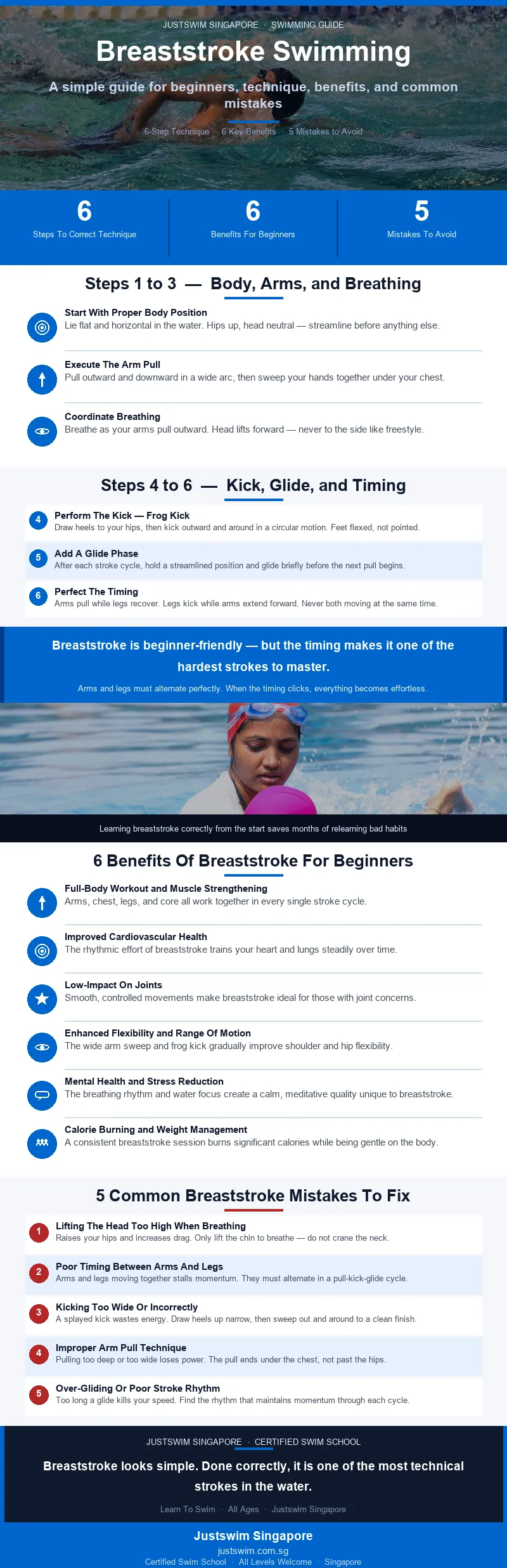
How To Swim Breaststroke Step-By-Step (With Easy Tips)
Learning breaststroke swimming can be simple and enjoyable when it is broken down into clear, manageable steps. For children and beginners, understanding each part of the stroke separately helps build confidence and prevents them from feeling overwhelmed.
In this section, we’ll guide you through the key movements of breaststroke, with practical tips to help your child develop good technique and swim comfortably in the water.
Start With Proper Body Position
A good breaststroke always begins with the right body position. Your child should float face-down in the water with their body as straight and horizontal as possible.
The head should stay in a neutral position, with the eyes looking slightly forward or down, rather than lifting the head too high. Keeping the head relaxed helps the rest of the body stay balanced in the water.
It is also important to keep the hips and legs close to the water’s surface. When the hips drop too low, the body creates more drag, making swimming harder and more tiring.
Encourage your child to imagine their body as a long, straight line gliding through the water. A streamlined body position helps them move more smoothly and use less energy with each stroke.
Execute The Arm Pull
The arm movement in breaststroke is wide, controlled, and symmetrical. Your child should start with both arms stretched straight out in front of them.
From there, the hands sweep outward slightly, with the palms facing out and down, before pulling inwards towards the chest. The elbows should bend naturally, staying higher than the hands to create a strong and effective pull.
Once the hands come together near the chest, the arms should quickly stretch forward again to return to the starting position.
This forward reach helps your child glide smoothly through the water. A proper arm pull creates forward movement without rushing, allowing beginners to stay relaxed and maintain a steady rhythm while swimming.

Coordinate Breathing
Breathing in breaststroke swimming should feel natural and comfortable, especially for children. Your child should take a breath as their arms pull in towards the chest.
At this point, the head only needs to lift slightly above the water, just enough to inhale. Lifting the head too high can cause the hips to sink, which makes swimming more difficult.
After taking a breath, your child should gently lower their face back into the water as the arms stretch forward again.
Exhaling slowly in the water helps them stay calm and prepared for the next breath. Learning to breathe in a relaxed and controlled way helps children swim longer, feel less tired, and enjoy their swimming lessons with greater confidence.
Perform The Kick (Frog Kick)
The frog kick is one of the most important parts of breaststroke swimming, as it provides most of the forward power. To begin, your child should bend their knees and bring their heels gently towards their hips while keeping the knees slightly apart.
The feet should then turn outwards, with the toes pointing to the sides, ready to push against the water. This position helps prepare the legs for a strong and effective kick.
Next, the legs sweep outwards and backwards in a circular motion, similar to how a frog kicks in the water. As the legs straighten, the feet push the water behind them, creating forward movement.
To finish the kick, the legs come together and extend straight, returning to a streamlined position. A proper frog kick not only helps your child move forward smoothly but also keeps their body balanced and steady in the water.
Add A Glide Phase
After completing the frog kick, your child should pause briefly in a streamlined position, known as the glide phase.
During this moment, both arms are stretched forward and the legs are fully extended, allowing the body to move forward naturally through the water. This glide helps swimmers make the most of the power generated from the kick without rushing into the next stroke.
However, it is important not to glide for too long. Over-gliding can slow down the overall rhythm and make swimming feel harder.
Encourage your child to enjoy a short, controlled glide before starting the next arm pull. When done correctly, the glide phase improves efficiency while helping children feel calm and in control as they swim.
Perfect The Timing
Good timing brings all parts of breaststroke swimming together into one smooth and comfortable movement. The correct sequence is simple and easy for children to remember: pull with the arms, take a breath, kick with the legs, then glide. Each action flows naturally into the next, creating a steady rhythm in the water.
When the arms pull in and the head lifts slightly to breathe, the legs should stay relaxed and straight. The kick begins only after the arms stretch forward again, followed by a short glide.
Proper timing helps children swim more fluidly, reduces unnecessary effort, and prevents them from feeling tired too quickly. With practice, this rhythm becomes natural, allowing young swimmers to enjoy breaststroke swimming with confidence and ease.

6 Benefits Of Breaststroke Swimming For Beginners
Breaststroke swimming is an excellent choice for beginners, especially children who are just starting to feel comfortable in the water. Its controlled pace and clear movements make it easier to learn while still offering a wide range of physical and mental health benefits.
For parents in Singapore, breaststroke is a practical and enjoyable way for children to stay active, build confidence, and develop essential swimming skills that support long-term wellness.
1. Full-Body Workout & Muscle Strengthening
Breaststroke swimming works almost every major muscle group in the body. The arm movements strengthen the shoulders, chest, and upper back, while the frog kick engages the hips, thighs, and lower legs. At the same time, the core muscles work continuously to keep the body balanced and stable in the water.
Because all these muscles are used together in a coordinated way, strength is developed evenly rather than focusing on just one area.
This makes breaststroke a great low-impact strength workout for children, helping them grow stronger without putting excessive strain on their bodies. Over time, regular practice can improve overall muscle tone and posture.
2. Improved Cardiovascular Health
Breaststroke swimming helps raise the heart rate in a steady and controlled manner, making it an effective cardiovascular exercise. As children swim continuously, their heart and lungs work harder to deliver oxygen to the muscles. This supports the development of a healthy heart and improves breathing efficiency.
With regular swimming, children can build better stamina and endurance. Over time, this contributes to improved circulation and overall cardiovascular fitness. Starting these habits early helps set a strong foundation for long-term health and an active lifestyle.

3. Low-Impact On Joints
One of the biggest advantages of breaststroke swimming is that it is gentle on the joints. The natural buoyancy of water supports the body’s weight, reducing stress on the knees, hips, and ankles. This makes swimming especially suitable for children who may not enjoy high-impact activities on land.
Because of its low-impact nature, breaststroke is also ideal for beginners and those recovering from minor injuries. Children can move freely in the water without worrying about hard surfaces or sudden impact. This allows them to stay active while protecting their growing joints.
4. Enhanced Flexibility & Range Of Motion
The wide, sweeping movements used in breaststroke help improve flexibility and joint mobility. The arm pulls encourage movement through the shoulders, while the frog kick gently stretches the hips, knees, and ankles. These repeated motions help maintain healthy joints and improve overall flexibility.
Over time, regular breaststroke swimming can support better range of motion and body coordination. For children, this helps with balance and movement control, which can also benefit other sports and physical activities. Improved flexibility reduces stiffness and supports healthy physical development.
5. Mental Health & Stress Reduction
Breaststroke swimming is not only good for the body but also for the mind. The rhythmic movements and steady breathing pattern help children feel calm and relaxed in the water. Swimming can provide a break from daily routines, school stress, and screen time.
Being in the water has a naturally soothing effect, and regular swimming can help improve mood and mental clarity. For many children, breaststroke becomes an enjoyable activity that boosts confidence and encourages a positive relationship with exercise.
6. Calorie Burning & Weight Management
Breaststroke swimming is an effective way to burn calories while still being comfortable for beginners. Even at a moderate pace, swimming helps children stay active and use energy in a fun and engaging way. This supports healthy weight management without the pressure of intense workouts.
Because breaststroke is enjoyable and easy to maintain, children are more likely to stick with it regularly. Consistent swimming habits encourage an active lifestyle and help children develop healthy routines that can last into adulthood.

Common Breaststroke Mistakes And How To Fix Them
When children are learning breaststroke swimming, it is very normal for small technique mistakes to happen. These errors often come from trying too hard, rushing movements, or feeling unsure in the water.
By spotting and correcting these common mistakes early, children can swim more efficiently, stay safe, and enjoy their lessons more. Parents should remember that improvement takes time, and focusing on gradual progress is far more important than aiming for perfection.
Lifting The Head Too High When Breathing
One of the most common mistakes beginners make is lifting the head too high out of the water to breathe. When this happens, the hips and legs tend to sink, causing the body to lose its horizontal position. This creates extra drag in the water, making swimming feel harder and more tiring for children.
To fix this, encourage your child to lift their head just slightly above the water when breathing. The mouth only needs to clear the surface to take a quick breath. Keeping the head low helps the hips stay up, improves balance, and allows the body to glide more smoothly through the water.
Poor Timing Between Arms And Legs
Breaststroke swimming relies heavily on good timing between the arms and legs. A common error is kicking too early, pulling again too quickly, or moving the arms and legs at the same time without a clear sequence. Poor timing breaks the rhythm of the stroke and reduces forward momentum.
The correct order should be easy for children to remember: pull, breathe, kick, and glide. When each movement follows the next smoothly, swimming feels more natural and less exhausting. Practising this rhythm slowly helps children develop better coordination and confidence in the water.

Kicking Too Wide Or Incorrectly
Another frequent mistake is kicking too wide or bending the knees excessively. When the legs spread too far apart or the kick comes mainly from the knees, it creates extra resistance in the water. This reduces forward movement and can make breaststroke feel awkward and ineffective.
To improve the kick, children should bring their heels towards their hips while keeping the knees relatively close together. The feet should turn out slightly before sweeping back and coming together. A controlled frog kick helps generate power while keeping the body balanced and streamlined.
Improper Arm Pull Technique
Improper arm movement is another issue commonly seen in beginners. Some children pull their arms too wide, too far back, or rush the movement without control. These actions waste energy and can throw off the timing of the entire stroke.
The arm pull should be smooth and rounded, with the elbows bending naturally and staying higher than the hands. Once the hands come together near the chest, the arms should extend forward quickly into a streamlined position. Proper arm technique helps maintain rhythm and allows children to move forward with less effort.
Over-Gliding Or Poor Stroke Rhythm
While gliding is an important part of breaststroke, too much gliding can actually slow a swimmer down. Some beginners pause for too long after the kick, losing momentum before starting the next stroke. This leads to uneven movement and poor overall rhythm.
To fix this, children should aim for a short and controlled glide rather than a long pause. The next arm pull should begin while there is still forward motion. Maintaining a steady rhythm keeps the stroke smooth, helps conserve energy, and allows children to swim continuously and confidently.
Conclusion About Breaststroke Swimming
Breaststroke swimming is a gentle, effective, and beginner-friendly stroke that helps new swimmers build confidence in the water. With its clear rhythm, easy breathing pattern, and controlled movements, it is ideal for children and beginners who are just starting their swimming journey.
By focusing on proper technique, understanding the benefits, and avoiding common mistakes, swimmers can progress safely while enjoying steady improvement. With regular practice, breaststroke swimming can become a lifelong skill that supports fitness, water safety, and enjoyment in the pool.
For parents in Singapore looking to help their children learn to swim confidently, JustSwim Singapore offers a supportive and effective learning environment. We specialise in private swimming lessons, as small group learning helps children stay focused and maximise progress.
Our mission at JustSwim is simple – to deliver the highest standard of swim coaching in water safety, progression, enjoyment, and affordability. With experienced and dedicated coaches who stay in the pool until strokes are done correctly, we ensure every child learns the right techniques while having fun.
We also provide customised swimming lesson plans for infants, toddlers, children, adults, and retirees, offering kids, adult, group, and private swimming lessons at condominiums and public pools across Singapore.
Contact JustSwim Singapore today for private swimming lessons and give your child a confident start in the water.
More from the blog
- Swim schools we admire around the world
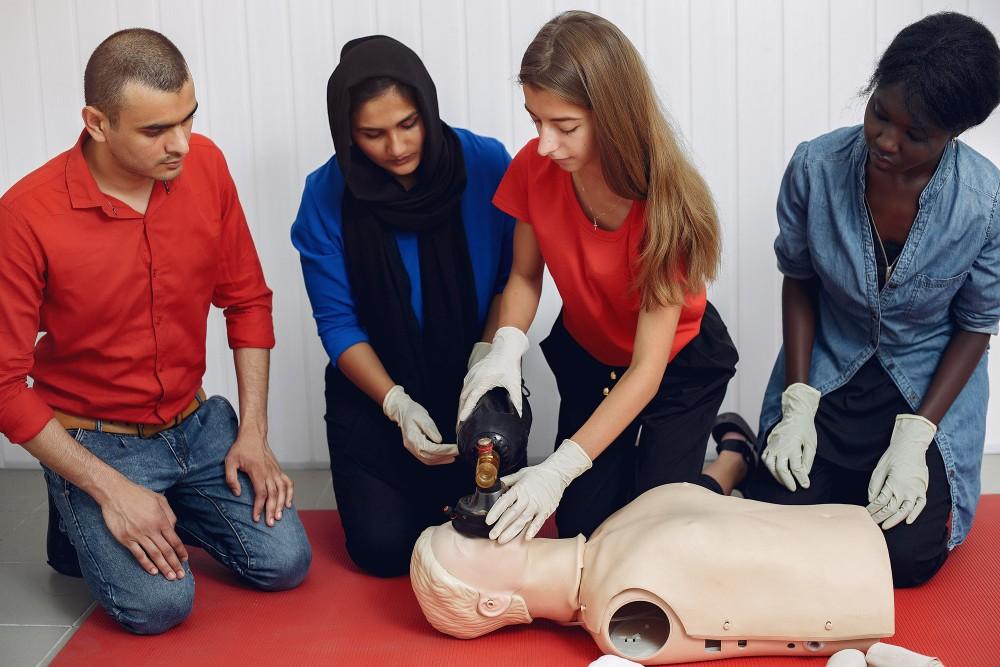 SFA Certification in Singapore: What It Covers, How Long It Lasts, and How to Renew
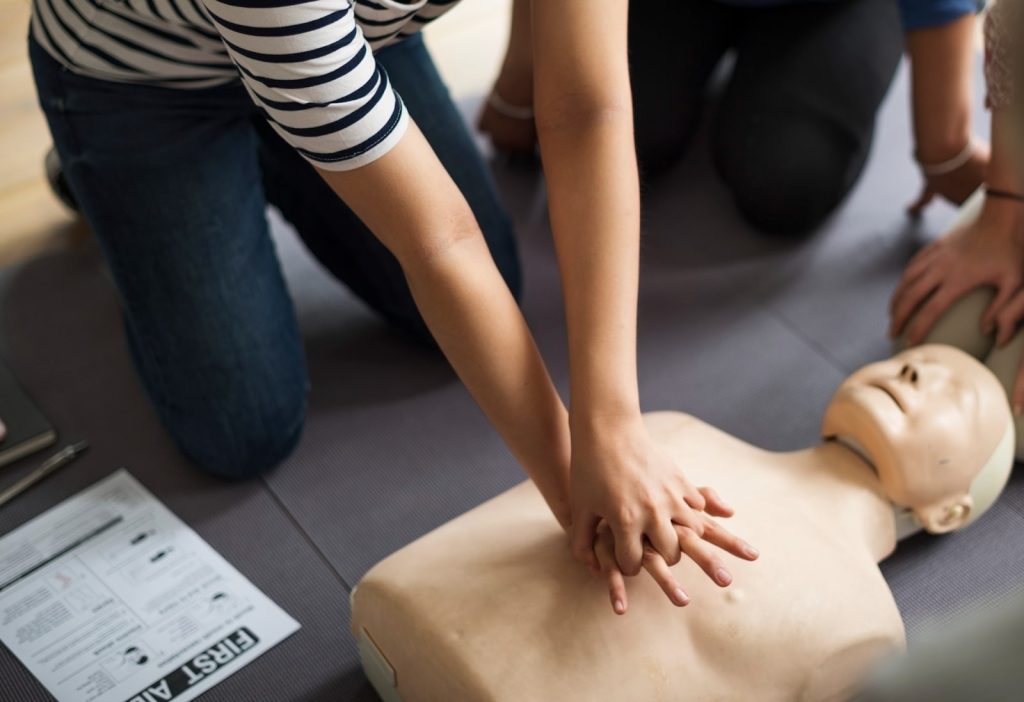 Occupational First Aid Course Singapore: OFAC and Other Types
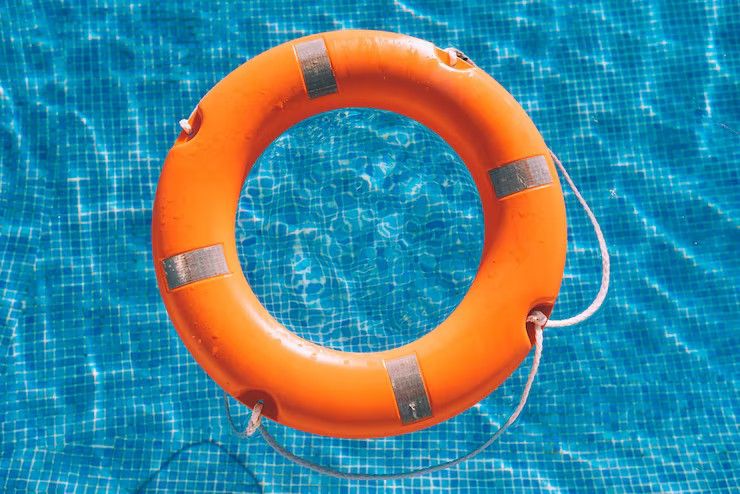 Singapore Life Saving Society (SLSS): Every Certification Explained
 SWOLF Swimming: What It Is, Average Scores & 5 Tips To Improve
Frequently asked questions
Is Breaststroke Swimming Safe For Beginners Who Are Afraid Of Water?
Yes, breaststroke swimming is generally safe for beginners who are afraid of water because it allows frequent breathing and a calm pace. Swimmers can keep their head above water more easily compared to other strokes. This helps build confidence and reduces anxiety over time.
Does Breaststroke Swimming Require A Lot Of Stamina?
No, breaststroke swimming does not require a lot of stamina, especially when performed at a relaxed pace. Beginners can swim slowly and take breaks between strokes. Stamina will naturally improve with regular practice.
Do Children Need To Practise Breaststroke Swimming Outside Of Lessons?
Yes, practising breaststroke swimming outside of lessons helps children reinforce what they have learned. Short and regular practice sessions improve coordination and confidence. This also helps children progress faster during formal lessons.
Are Swimming Goggles Or Equipment Required To Learn Breaststroke?
No, swimming goggles or special equipment are not required to learn breaststroke swimming. However, goggles can help children feel more comfortable and focus better in the water. Any additional equipment is usually introduced later for practice purposes.
Should Parents Choose Breaststroke As The First Swimming Stroke For Kids?
Yes, many parents choose breaststroke as the first swimming stroke because it is gentle and easy to learn. The stroke allows simple breathing and controlled movements, which suits beginners well. It also helps children develop basic water safety and confidence.