Anyone who has tried how to teach someone how to swim knows it is not as simple as it sounds. You begin full of excitement, ready to share your love for the water, but soon realise it takes more patience and reassurance than expected.
Watching someone you care about struggle with fear or hesitation can be tough. You want to help, but you are not sure what works best.
This guide breaks the process into seven practical steps that make swimming lessons smoother, safer, and more rewarding for both of you.
1. First Things First: Acknowledge The Responsibility (And When To Call A Pro)
Teaching someone to swim carries real responsibility. Aside from showing movements, you are guiding someone’s safety, confidence, and comfort in the water. Every instruction matters, especially for beginners who rely on your calm presence.
It is perfectly fine to teach basic water familiarisation and floating skills on your own. However, once lessons involve deeper water, advanced strokes, or overcoming fear, it is best to involve a certified swimming instructor. Professionals are trained to handle panic, teach proper techniques, and maintain strict safety standards.
Think of your role as a bridge to confidence. You can introduce the joy of swimming, but expert guidance ensures lasting safety and skill.
2. Understand The Learner’s Needs And Fears
Your first lesson begins before you even enter the water. Effective swim lessons start with understanding each student’s unique needs. Many children and adults fear deep water or are not comfortable putting their faces wet. It’s crucial for a swimming teacher to acknowledge these fears. Here’s how you can practically implement this:
- Individual Assessment: Begin by having a one-on-one conversation with each learner. Ask about their previous experiences with water, any incidents that might have led to fear, and what they hope to achieve from the lessons.
- Empathetic Approach: Show empathy and understanding. Acknowledge their fears as valid and assure them that their concerns will be addressed.
- Use of Aids: For extreme cases, consider using goggles to help get the face wet or floatation devices for those afraid of deep water.
- Positive Reinforcement: Celebrate small achievements and progress. Positive reinforcement can significantly boost confidence.
- Create a Safe Environment: Always ensure that the learning environment feels safe. This includes having clear safety rules and emergency procedures in place.
3. Choose The Right, Safe Environment
Forget the deep end. Your entire first lesson should be in water where the learner can comfortably stand. This sense of security is non-negotiable.
- Shallow Water: Choose a part of the pool where the water is no deeper than their waist or chest.
- Warm & Calm: If possible, opt for a warmer pool. A cold environment creates physical tension, which makes learning to relax and float much harder.
- Minimal Distractions: A quiet pool with few other people is ideal. This helps reduce the learner’s self-consciousness (a major fear for adults) and allows them to focus on you.
4. Begin With Water Familiarisation In Shallow Water
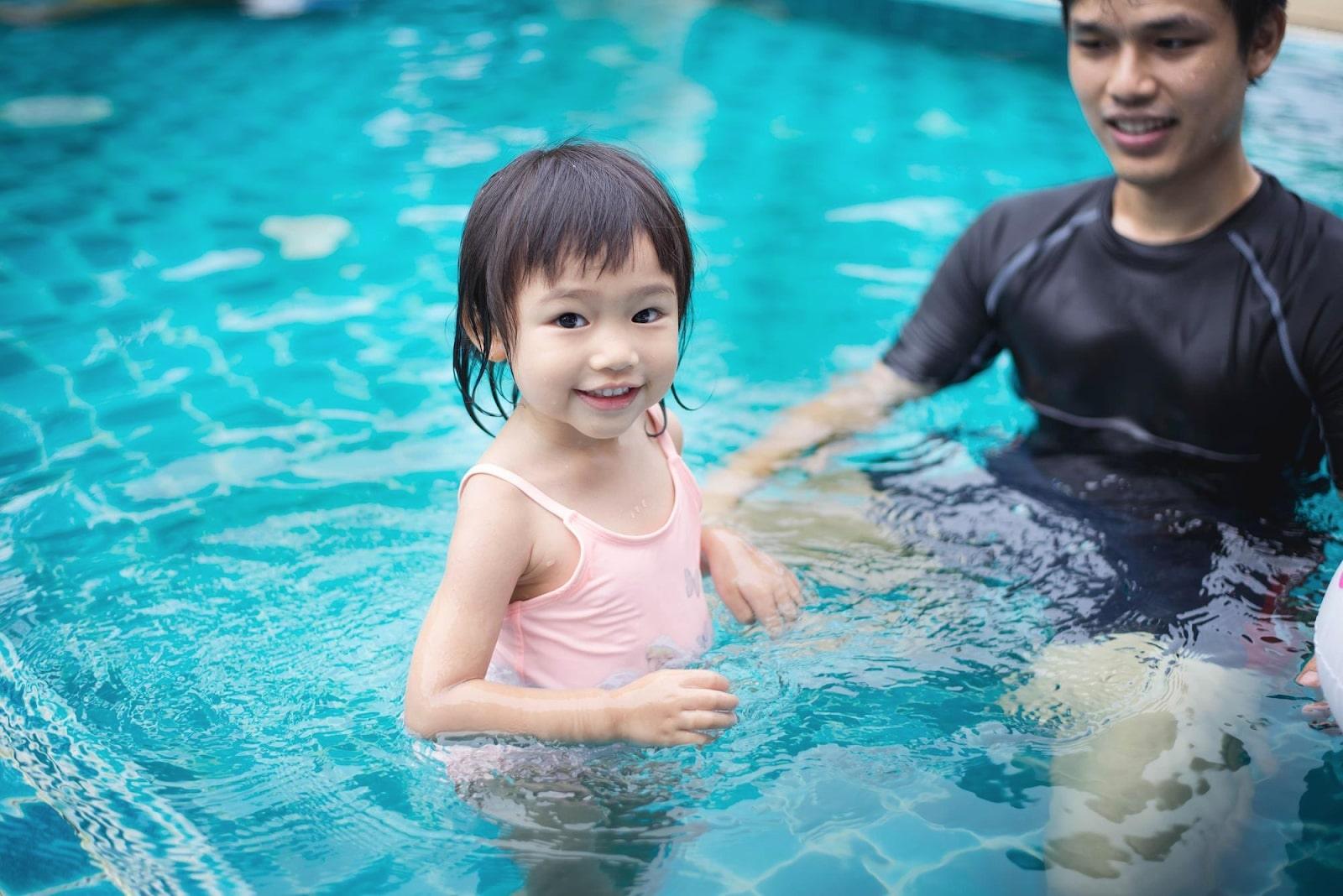
Water familiarisation is the foundation of swimming instruction. Begin lessons in the shallow end where learners can comfortably stand. This creates a sense of security. Here are other practical steps to help learners become familiar with water.
- Blowing Bubbles: Teach kids to blow bubbles in the water. This simple activity helps them get used to having their face close to or in the water. It also aids in breath control.
- Floating and Kicking: Start with basic floating exercises, such as starfish float (floating on the back) and jellyfish float (floating on the front). Practise gentle kicking movements while holding onto the side of the pool or a floatation device.
- Gradual Exposure: For those afraid of deep water or getting their faces wet, gradually introduce them to these aspects. Start with sitting on the pool’s edge and splashing water on the face, then progressively move to a standing position in shallow water, and so on.
5. Incorporate Fun and Engaging Activities
Swimming lessons should be fun! Games and activities make the lessons enjoyable and teach essential skills like floating, kicking, and basic arm movements. The following are some activities that you can try in your swimming lessons.
- Red Light, Green Light: This game effectively teaches leg kicking. Have the kids sit on the pool edge with their feet in the water. When you say ‘green light,’ they kick as hard as possible, and ‘red light’ means stop. This game also helps improve listening skills and establishes instructor-child boundaries.
- Ring/Coin Toss: Use rings or coins to encourage swimming to deeper parts of the pool. Both kids and adult learners will enjoy retrieving items from the pool floor, and this activity also allows them to make decisions, like choosing the number and colours of rings to retrieve.
- Superhero Glides: This game helps kids understand streamlining. Let them pick a superhero, show their ‘superhero’ arms, and practice gliding. This approach allows them to remember the skill by associating it with something fun.
- Ice Cream Scooping: Teach arm movements by having kids pretend to scoop ice cream in the water. Encourage them to take ‘big scoops,’ which also teaches them to keep their fingers together for better propulsion in water.
- F-I-S-H: This is the aquatic version of H-O-R-S-E in basketball. Players perform a swimming move that others have to replicate. It’s a great way to practise different strokes and swimming techniques in a competitive yet fun way.
6. Introduce Submersion (Going Underwater)
Once they are comfortable blowing bubbles, the next step is getting their whole head wet. This is a huge mental barrier.
- Use Goggles: Goggles are a great tool to help them feel comfortable opening their eyes underwater.
- “Bobbing”: Start by “bobbing” like an elevator. Hold onto the wall, take a deep breath, and squat down until their chin is in the water, then come back up. Repeat with their mouth, then their nose, and finally, their whole head for just one second.
- Count Underwater: Have them go under and count to 3 on their fingers, then come up. This gives them a sense of control and a clear goal.
7. Practise Floating (The Key To Swimming)
Floating is the key to all swimming. You cannot swim if you cannot float.
- Supported Back Float: Stand in front of them and let them hold your hands as they lift their feet and try to float on their back. Have them rest their head back on your shoulder if they are nervous.
- Starfish Float: Encourage them to spread their arms and legs wide (like a starfish) while on their back, as this creates more surface area and makes floating easier.
- Jellyfish Float: Have them take a deep breath, put their face in the water (as practised in Step 5), and hug their knees to their chest. This shows them how their lungs act like a natural float.
8. Focus On Body Position And Basic Swimming Strokes
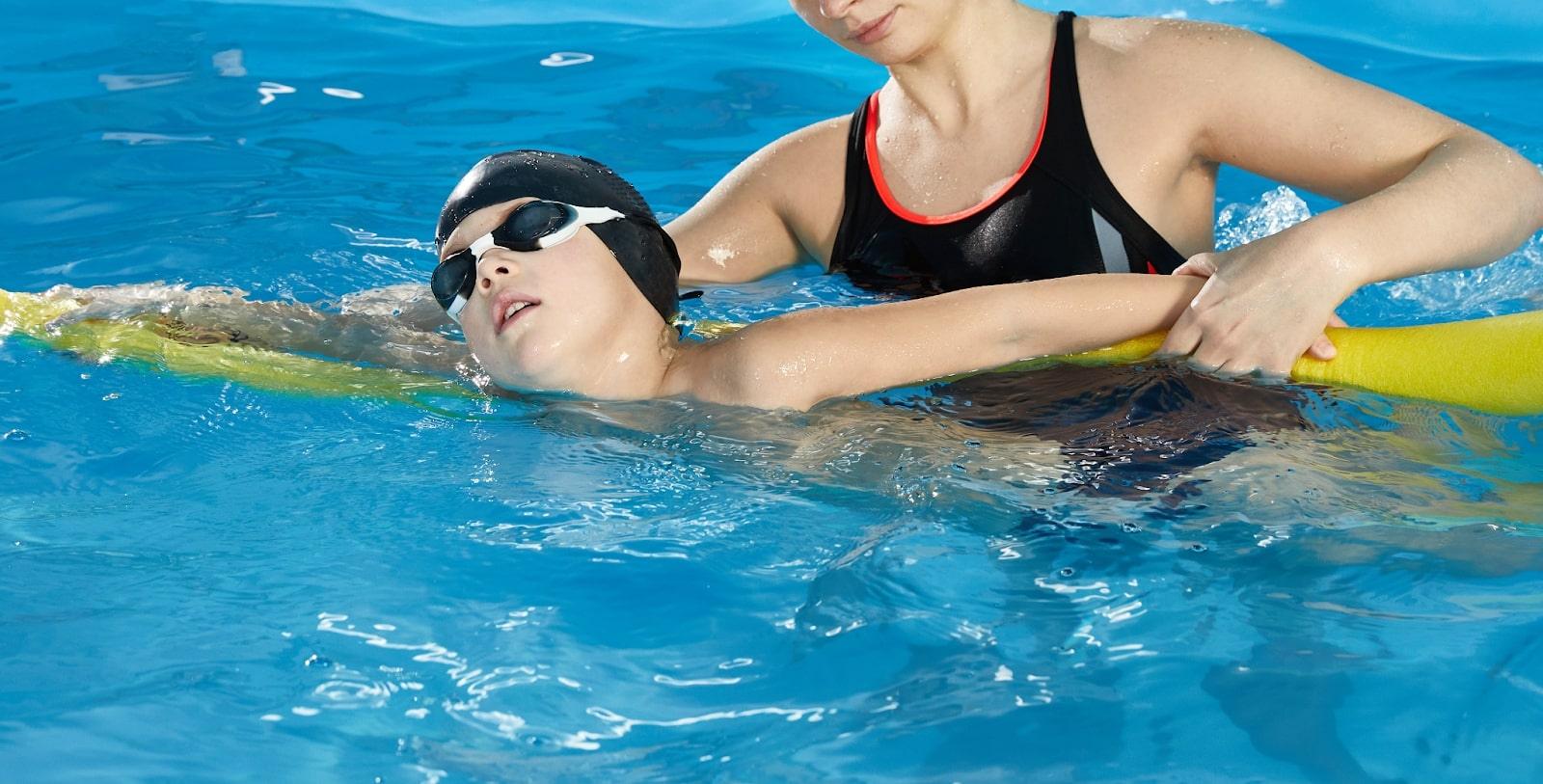
One of the first skills to teach in swim lessons is proper body position. This includes maintaining a horizontal position and understanding buoyancy. In addition to body position, basic strokes are also essential as they lay a strong foundation for more advanced swimming skills.
Here are some tips for effective teaching:
- Dog Paddle: Start with the dog paddle, a simple and instinctive stroke. Demonstrate the motion and have learners practise it in shallow water, focusing on coordinated movements of arms and legs.
- Freestyle Stroke: Introduce freestyle by breaking down its components. Start with arm movements, then add leg kicking, and finally, incorporate breathing techniques. Use drills like single-arm freestyle to focus on one aspect at a time.
- Drill Practice: Use specific drills for each swim stroke component. For example, for freestyle, practice arm strokes without kicking to focus on upper body movement or kick with a board to focus on the legs.
- Feedback and Correction: Provide continuous feedback and make corrections as learners practice. Use demonstrations and hands-on adjustments to help them understand the correct techniques.
9. Use A Variety of Teaching Methods
A good swim instructor knows that children and adults learn differently. That’s why adapting a variety of teaching methods is necessary to cater to the diverse learning styles of both children and adults.
- Shallow Water Method: This is ideal for beginners and is used in pool areas where learners can stand safely. It helps gain confidence quickly, facilitates easy breathing, and helps achieve a horizontal position without the need for buoyancy aids.
- Deep Water Method: This method encourages learners to swim out of their depth, enhancing strength and confidence in deep water and developing swimming stamina. It may require buoyancy aids and possibly an assistant for safety.
- Poolside Positioning: Effective communication is crucial, so the teacher should be positioned where all pupils can see and hear clearly. Ideally, teachers should be in the water with beginners for better communication and reassurance.
- Water Confidence: Allowing self-discovery is essential. Offer a variety of swimming activities to provide new experiences. Always consider the pupils’ ability and confidence levels, and never force them to participate in activities they’re uncomfortable with.
- BLABT Technique: This technique breaks down swimming strokes into Body position, Legs, Arms, Breathing, and Timing. Specific exercises or drills focus on each area. For instance, for front crawl, body position could be taught through push and glide, legs through kicking with a kickboard, arms through one-arm pull with a buoyancy aid, breathing through trickle breathing while kicking, and timing through catch-up stroke.
10. Use Flotation Devices As Tools, Not Crutches
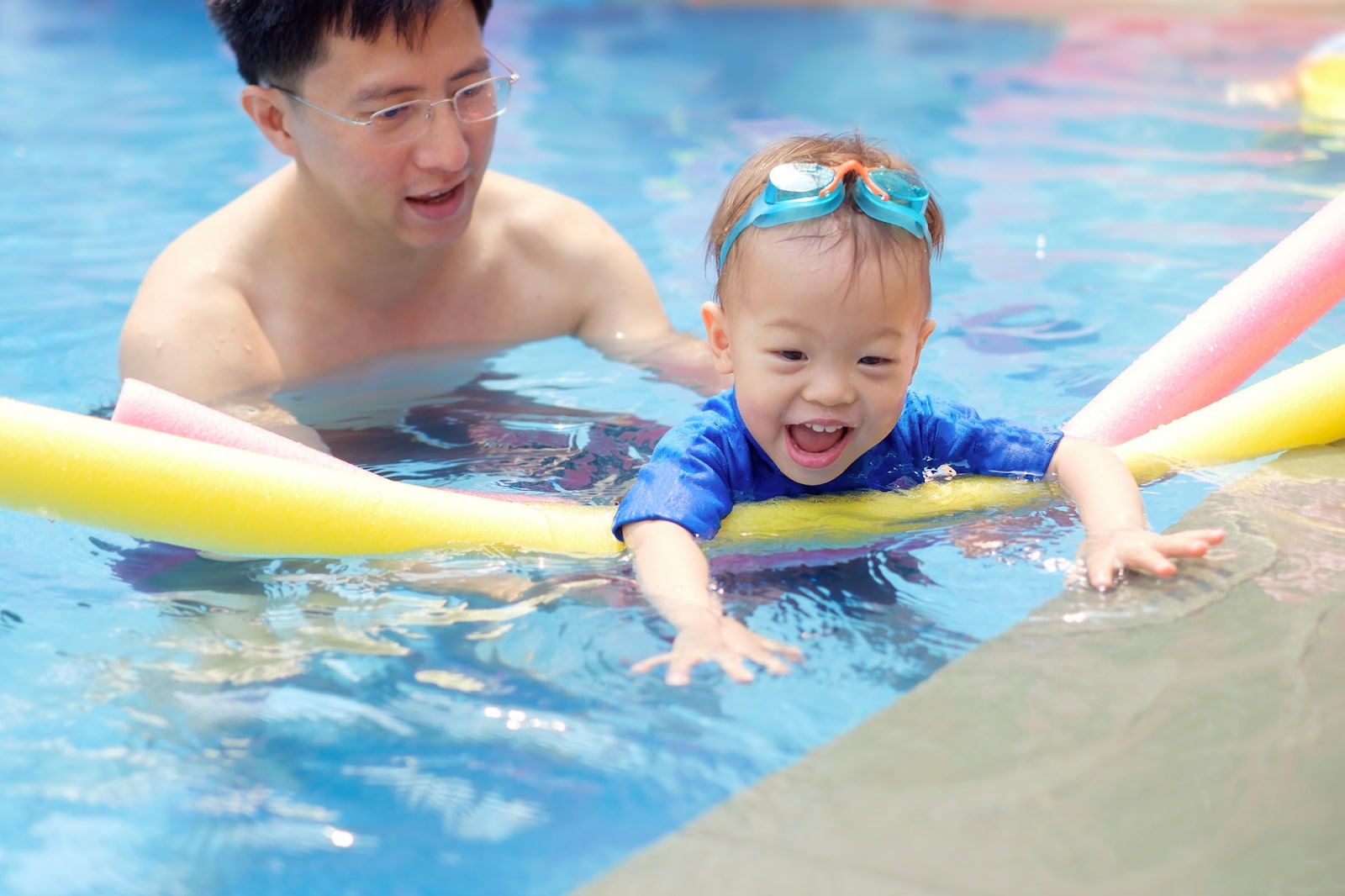
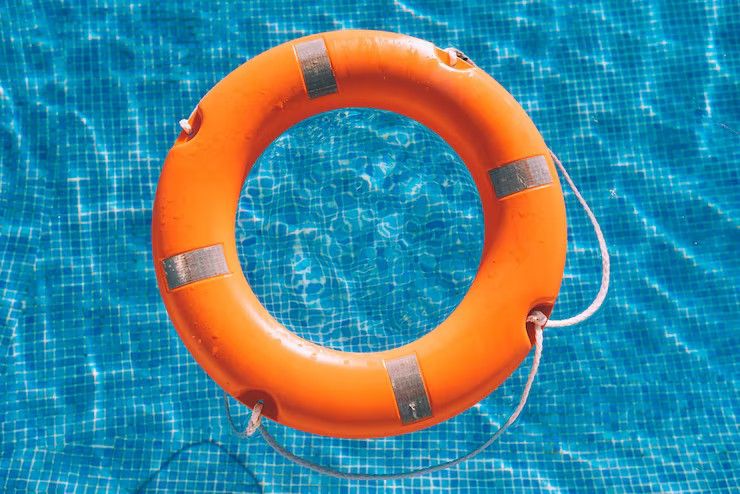
Safety is paramount in swim lessons, making floatation devices important. However, you should use these aids responsibly and in moderation.
- Tools (Good): Devices that can be let go of (like kickboards, noodles, and pull buoys) are beneficial for improving body position, isolating skills, and building confidence.
- Crutches (Use With Caution): Wearable devices that cannot be let go, like floaties and life jackets, are generally not recommended for teaching. They can create a poor, vertical body position and give a false sense of security.
11. Encourage Regular Practise
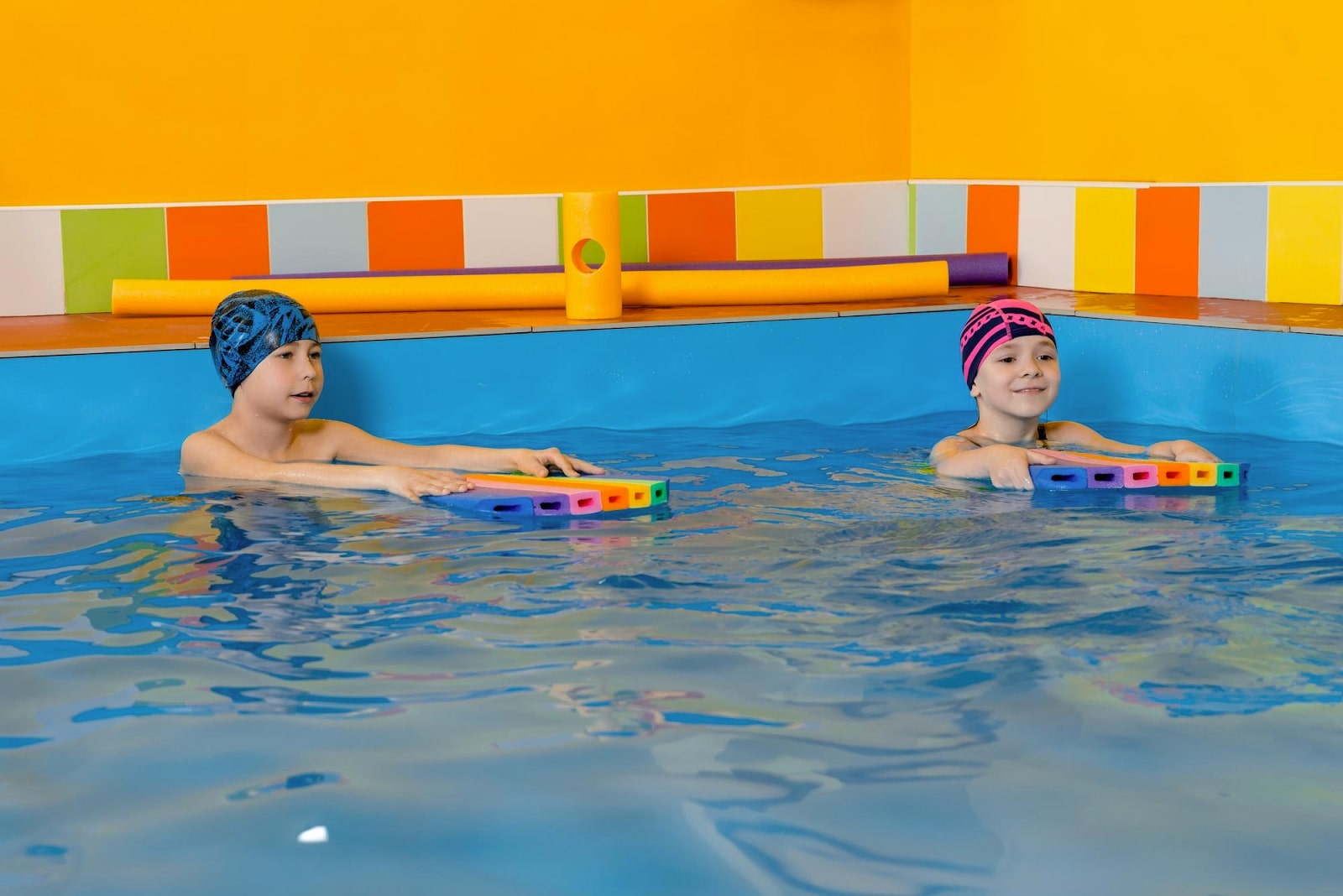
Regular practice is key to developing swimming skills. Establish a swimming schedule and include a variety of activities and strokes in your practice sessions.
Encourage parents to practise with their children outside of swimming class. As learners gain confidence, gradually move them to deeper water, ensuring they feel confident with each new step.
This is especially important for children, as a frequent practice helps reinforce the skills and prevent forgetting what they’ve learned.
How To Be A Better Swim Teacher?
If you want to start teaching swimming seriously, you must invest time and effort in honing your skills. Being a good swimmer is not enough, as swim teachers should effectively demonstrate techniques during instruction. Also, this helps maintain credibility and trust.
Here are more ways to become more efficient in teaching swimming:
- Obtain Professional Certification: In Singapore, being certified as a swim teacher is crucial. Pursue certifications from recognised bodies such as the Singapore Swimming Association (SSA). These certifications equip you with the necessary technical skills and ensure that you are updated on safety protocols and teaching methodologies.
- Embrace Continuous Learning and Adaptation: The field of aquatic education is constantly evolving. Stay informed about the latest techniques, safety guidelines, and teaching tools. Attend workshops and seminars and join local swim teaching associations. Adapting to new methods and technologies, like using swim analysis software or incorporating modern training aids, can enhance your teaching effectiveness.
- Be Patient And Positive: Your student will feed off your energy. Celebrate small wins, like putting their face in the water or floating for three seconds; these moments are the key building blocks. This patience is vital because how long it takes to learn swimming varies for everyone, so you must never show frustration.
- Develop Strong Communication and Empathy Skills: Effective communication and empathy are essential, especially when teaching beginners or individuals with a fear of water. Tailor your communication to suit different age groups and skill levels. Being patient, encouraging, and understanding individual learning paces can create a supportive and effective learning environment.
Conclusion About How To Teach Someone To Swim
Teaching swimming is not just about the physical act of swimming; it’s about building confidence, encouraging a love for the sport, and ensuring safety. As a swim instructor, your goal is to help many kids and adults transform from cautious beginners to confident swimmers.
Remember, every great swimmer started with the basics – from blowing bubbles to perfecting their arm movements. With patience, practice, and passion, teaching swimming can be an incredibly rewarding experience.
At JustSwim Singapore, we offer the best swimming instructor course, which you can complete in just three months or less. Our programme covers everything from swimming techniques, teaching methodologies, and safety protocols to first aid.
Register today or contact us to learn more about our course!
Frequently Asked Questions About How To Teach Someone To Swim
How To Teach Someone To Swim?
The best way is to start in shallow water, focusing first on water confidence and blowing bubbles. Then, introduce floating on their back and front. Once they can float, you can progress to basic kicking and arm movements.
What Is The Best Age To Start Teaching Swimming?
Children can start learning to swim from a very young age, often around 1-4 years old. It’s essential to ensure they’re comfortable and safe in the water.
How Long Does It Typically Take To Learn To Swim?
This varies greatly depending on the individual, but basic proficiency can often be achieved in a few months with regular practice.
How Can I Monitor And Track The Progress Of Someone Learning To Swim?
Set achievable goals, use a progress chart, and provide regular feedback on skill development and areas for improvement.
What Should Be Avoided When Teaching Swimming?
Avoid pushing learners too hard or too fast, relying excessively on flotation devices, and neglecting individual comfort levels or fears.