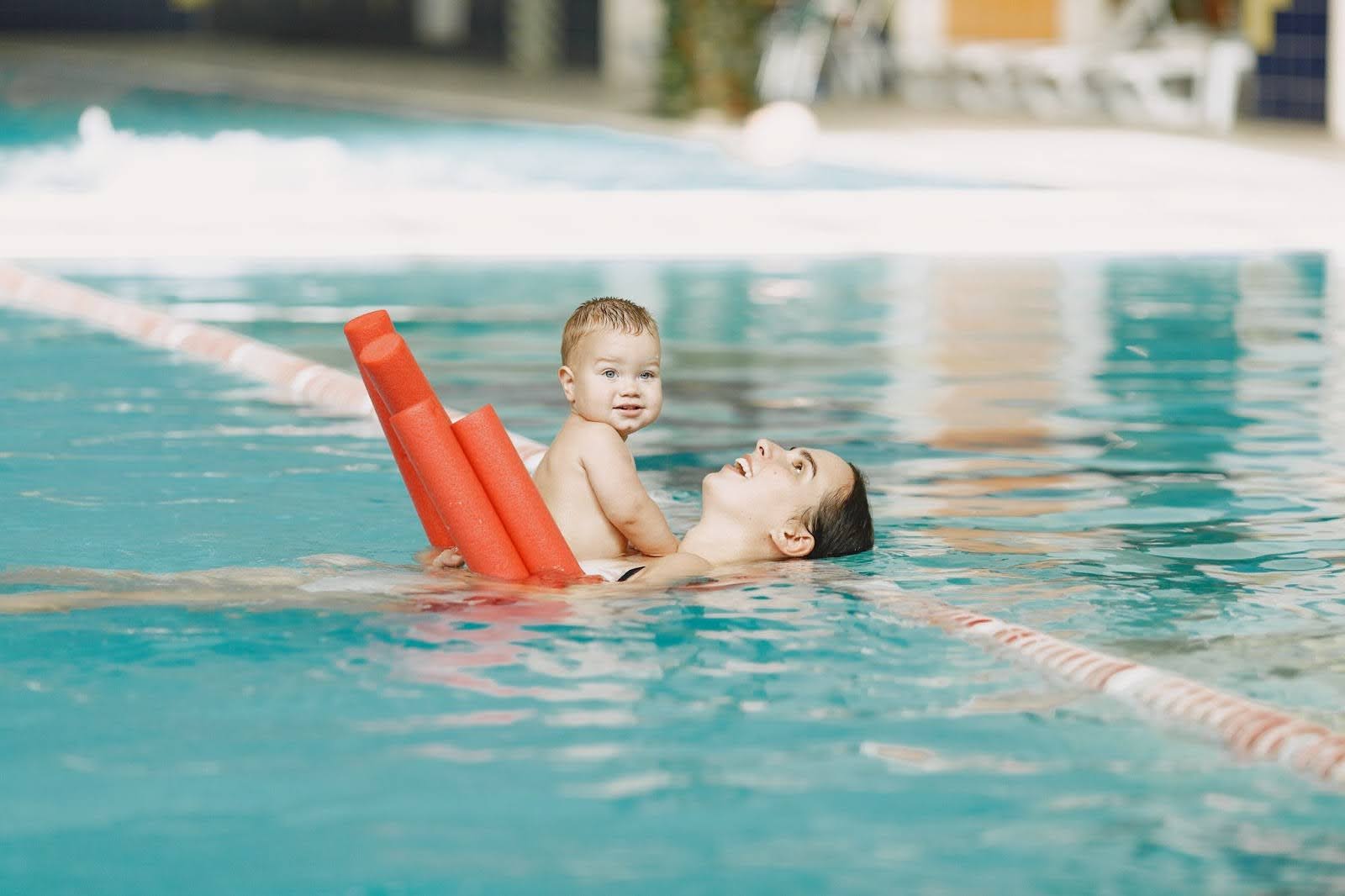
Many parents think swimming is something children learn later. But more families are starting much earlier. Infant swimming is now common in many places. Parents bring babies to the pool not to train them, but to help them feel safe and relaxed in water.
Water is familiar to babies. They spent months floating in the womb. Being in a pool can feel natural to them. When done properly, infant swimming is gentle, calm, and guided. It focuses on comfort, trust, and simple movement rather than skill or speed.
In this blog, we’ll talk about the benefits of infant swimming and why you should start early.
What Is Infant Swimming?
Infant swimming refers to water sessions designed for babies, typically starting at a few months old. These sessions are slow and supportive. A parent or instructor stays close at all times. The goal is not to teach strokes or techniques.
Instead, the focus is on water awareness. Babies learn what water feels like, how to move gently, and how to stay calm. Sessions often include songs, floating, light movement, and simple games. Everything happens at the baby’s pace.
Infant swimming usually includes:
- Parent or caregiver in the pool
- Short sessions with breaks
- Warm water and calm settings
- Simple movements and floating
- Focus on comfort, not performance
Infant Swimming vs Adult Swimming Lessons
Teaching infants is very different from teaching adults. Adults can listen, follow instructions, and understand fear. Babies cannot do any of that. They respond only to comfort, tone, and physical support.
Infants also tire quickly. Their attention span is short. Their muscles are still developing. This makes teaching more challenging and requires patience. Sessions must be flexible and responsive to how the baby feels that day.
Key differences include:
- Infants learn through feeling, not instruction
- Safety depends fully on the adult
- Progress is slow and non-linear
- Comfort matters more than technique
- Sessions are shorter and gentler
Infant Swimming Benefits
Infant swimming offers many benefits. These benefits are not about turning babies into athletes or pushing skills too early. They focus on comfort, healthy development, and emotional connection. Everything happens gently, at the baby’s pace.
1. Builds Water Comfort Early
Early exposure to water helps babies feel calm and safe in the pool. When babies experience water in a controlled and supportive setting, they learn that it is not something to fear. This early comfort can stay with them as they grow.
A relaxed baby is more open to movement and exploration. Instead of tensing up, they float, kick, and respond naturally. This positive feeling around water often reduces anxiety later when lessons become more structured.
2. Supports Physical Development
Water supports the body, which allows babies to move freely without pressure on their joints. Gentle kicking and arm movements help strengthen muscles in a safe way. Balance and coordination begin to develop through natural movement.
The resistance of water adds light strength work without strain. Babies move against the water without even realising it. Over time, these movements support overall physical growth and body control.
3. Encourages Better Sleep
Swimming uses energy calmly and steadily. After a session, many babies feel relaxed and ready to rest. This combination of movement and warmth can help babies settle more easily.
Some parents notice changes in sleep patterns after regular swimming. Babies may fall asleep faster after swimming or sleep more deeply. While every baby is different, many families find that swimming improves sleep as part of a routine.
4. Strengthens Parent and Baby Bond
Infant swimming is usually done with a parent in the water. Parents hold, support, and guide their baby throughout the session. This close contact builds trust and emotional security.
The shared experience creates special moments. Eye contact, gentle touch, and calm voices help babies feel safe. Parents also grow more confident handling their baby in a new environment.
5. Improves Body Awareness
Water gives babies a clear sense of how their bodies move. Floating, kicking, and gentle turns help them understand where their arms and legs are. This awareness supports coordination and movement control.
As babies explore motion in water, they gain confidence in how their body responds. This early body awareness can support later skills like crawling, walking, and other physical activities.
6. Introduces Early Safety Awareness
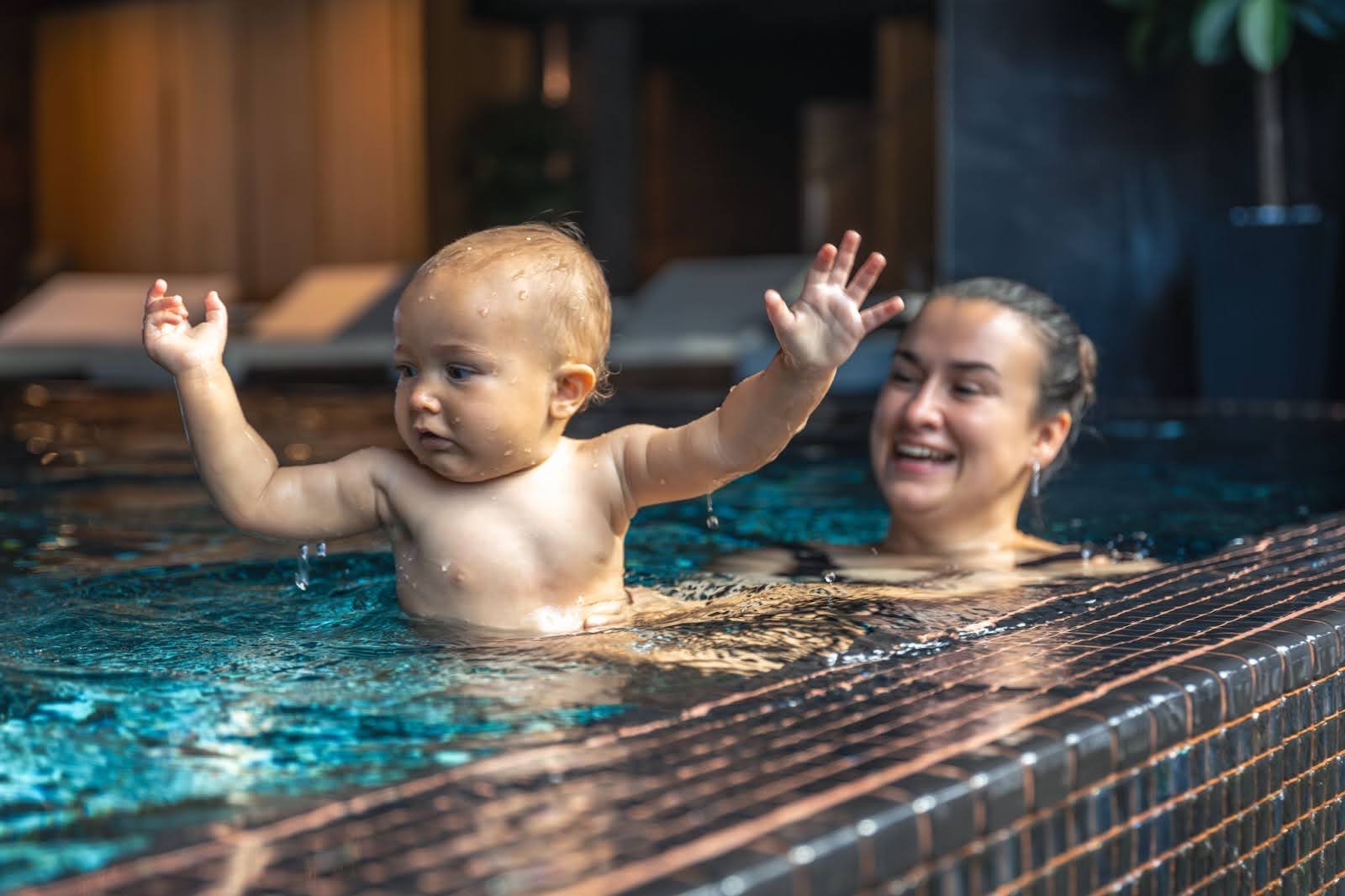
Infant swimming can introduce basic ideas about water boundaries. This does not mean babies learn to protect themselves. Instead, they become familiar with the environment and basic cues.
Simple actions like holding the pool edge or staying calm when floating can be introduced gently. These early experiences support safer attitudes towards water as children grow older.
7. Supports Breathing Control
Babies have a natural reflex to hold their breath for short moments. Swimming sessions can gently support this reflex in a safe way. Everything is done slowly and with close supervision.
The focus is comfort, not control. Over time, babies may stay calmer when water touches their face. This helps reduce panic and builds trust in the water environment.
8. Encourages Social Interaction
Group infant swimming classes expose babies to other children. They hear different voices, see new faces, and experience shared space. This supports early social awareness.
Parents also benefit from the group setting. Meeting other parents going through similar stages can feel reassuring. These shared experiences can reduce feelings of isolation.
9. Creates a Positive Routine
Regular swimming sessions help build a routine. Babies start to recognise patterns and activities. Predictable routines often make babies feel more secure.
Swimming can become a calm and enjoyable part of weekly family life. Over time, it may become one of the best hobbies to start for families who enjoy spending active time together.
10. Builds a Foundation for Future Swimming
Infant swimming is not about learning strokes or speed. It builds comfort, confidence, and familiarity with water. These foundations make later learning easier.
When children grow older, they often adapt faster to lessons. Skills like floating, kicking, and even breaststroke can feel more natural. Early comfort helps learning feel less stressful and more enjoyable.
Tips for Infant Swimming
A few simple tips can make sessions safer and more enjoyable.
- Choose the Right Pool: Look for warm water and clean facilities. Infant pools should feel comfortable, not cold.
- Keep Sessions Short: Babies tire quickly. Short sessions are better than long ones.
- Follow Your Baby’s Mood: If your baby is upset or tired, stop. Progress is not linear.
- Hold Securely at All Times: Never loosen your grip. Safety always comes first.
- Avoid Forcing Movements: Let your baby move naturally. Do not push skills too early.
- Watch for Hunger or Fatigue: Swimming uses energy. Feed and rest your baby when needed.
- Stay Calm Yourself: Babies sense stress. A calm parent helps the baby relax.
How to Get Your Infant Engaged in Swimming
Keeping babies engaged helps sessions go smoothly.
- Use Your Voice: Talk or sing softly. Familiar sounds provide comfort.
- Smile and Maintain Eye Contact: Babies respond strongly to facial expressions.
- Move Slowly: Gentle movements help babies feel safe.
- Repeat Simple Activities: Repetition builds familiarity and confidence.
- Let Them Splash Lightly: Small splashes help babies explore water.
- End on a Positive Note: Finish before your baby becomes tired or upset.
Equipment and Gear to Prepare
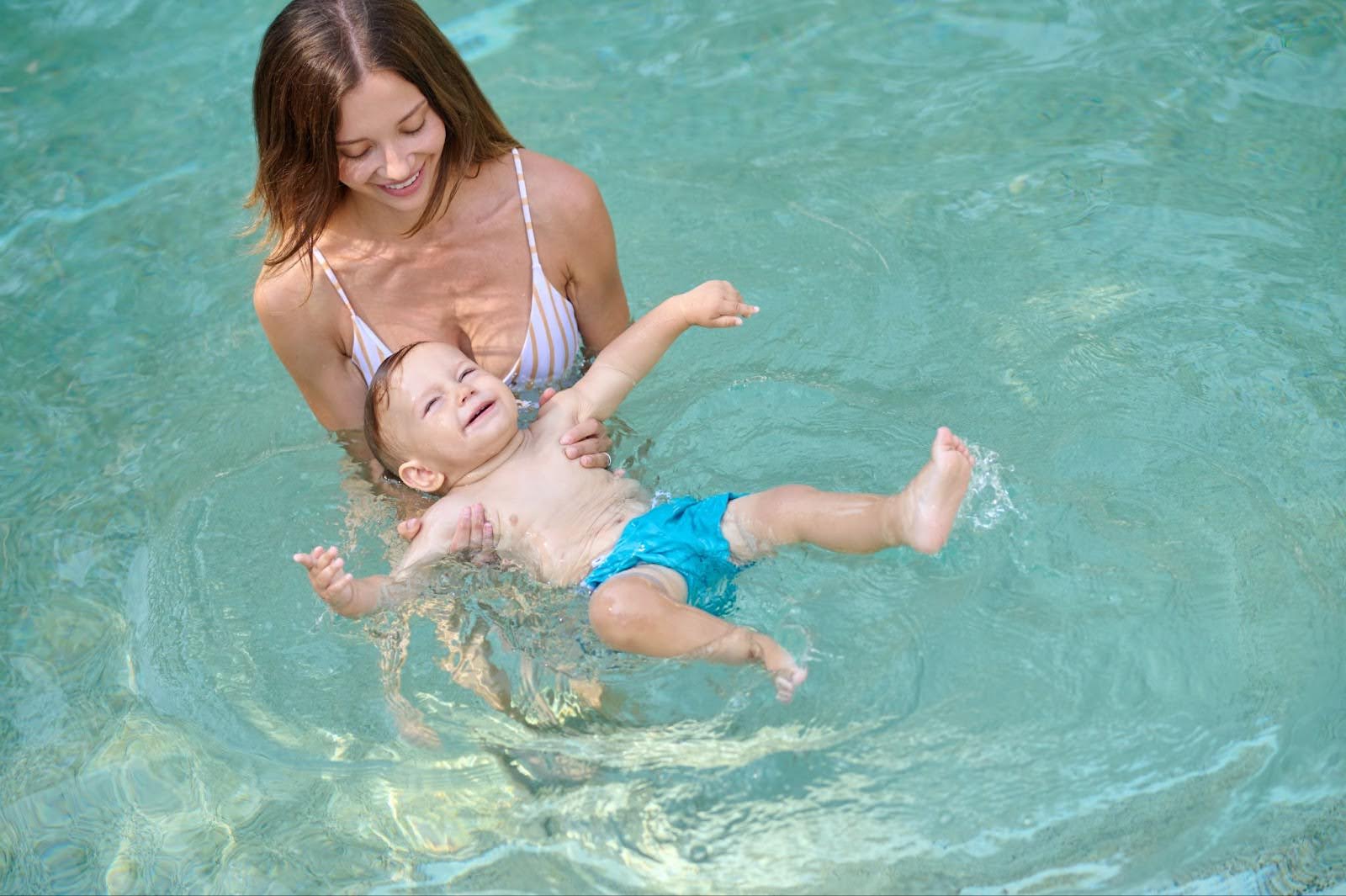
Preparation helps swimming sessions feel calm and stress-free. Having the right items ready means parents can focus on their baby instead of worrying about what they forgot. A simple gear is enough at this stage.
Swim Nappies
Swim nappies are essential for infant swimming. They are designed to hold accidents while allowing water to flow through. This helps keep the pool clean and safe for everyone.
Choose swim nappies that fit snugly around the legs and waist. A good fit prevents leaks and keeps babies comfortable in the water. Both reusable and disposable options work well if they fit properly.
Infant Swimsuit
A comfortable swimsuit helps babies stay warm during sessions. Look for soft, stretchy materials that allow easy movement. Tight or stiff fabrics can make babies uncomfortable.
Quick-drying fabrics are useful, especially after lessons. A well-fitted swimsuit also makes it easier to handle your baby in the water. Comfort matters more than style at this age.
Towel or Robe
A warm towel is important once babies leave the pool. The temperature change can feel sudden, and a towel helps them feel secure and calm. Hooded towels are especially helpful for keeping the head warm.
Some parents prefer soft robes designed for infants. These can be wrapped around quickly and stay in place while you move to the changing area. Warmth helps babies relax after swimming.
Goggles Not Needed
Infants do not need goggles for swimming sessions. At this stage, the focus is on comfort and gentle movement, not underwater vision. Keeping things simple reduces fuss.
Babies usually keep their eyes closed naturally when water splashes. Introducing goggles too early can cause discomfort. It is better to let babies experience water in a natural way.
Warm Clothes After Swimming
Babies cool down quickly once they leave the pool. Having warm clothes ready makes a big difference. Choose soft layers that are easy to put on.
Dressing your baby promptly helps prevent chills. It also helps them feel calm and settled after the session. Comfort after swimming is just as important as comfort in the water.
Conclusion on Infant Swimming Benefits
Infant swimming benefits go beyond the pool. They support comfort, bonding, and early development. These sessions are not about speed or skill. They are about trust, calm, and positive experiences.
At JustSwim, we believe early water exposure should feel safe and supportive. We guide families through each step with care. Contact our team to learn how our programmes can support your child’s first swimming journey. Contact us to get started!
Frequently Asked Questions About Infant Swimming
Is Infant Swimming Safe?
Yes, when done with trained instructors and proper supervision. Sessions are gentle and designed around baby safety. Parents stay involved at all times.
At What Age Can Babies Start Swimming?
Many babies start from a few months old. It depends on health and comfort. Always check with your doctor if unsure.
Can Infant Swimming Prevent Drowning?
No programme can guarantee prevention. Infant swimming helps build comfort and awareness, not survival skills.
Do Babies Learn Swimming Strokes?
No, babies do not learn strokes like the fastest swimming stroke. Lessons focus on comfort and movement, not technique.
Is Dry Practice Needed for Infants?
Infants do not need dryland training. All learning happens gently in water through guided movement.